Fit & style
Steel Bracelet vs. Leather Strap: Comfort, Care and Character
The attachment changes comfort, formality and maintenance more than many buyers expect.
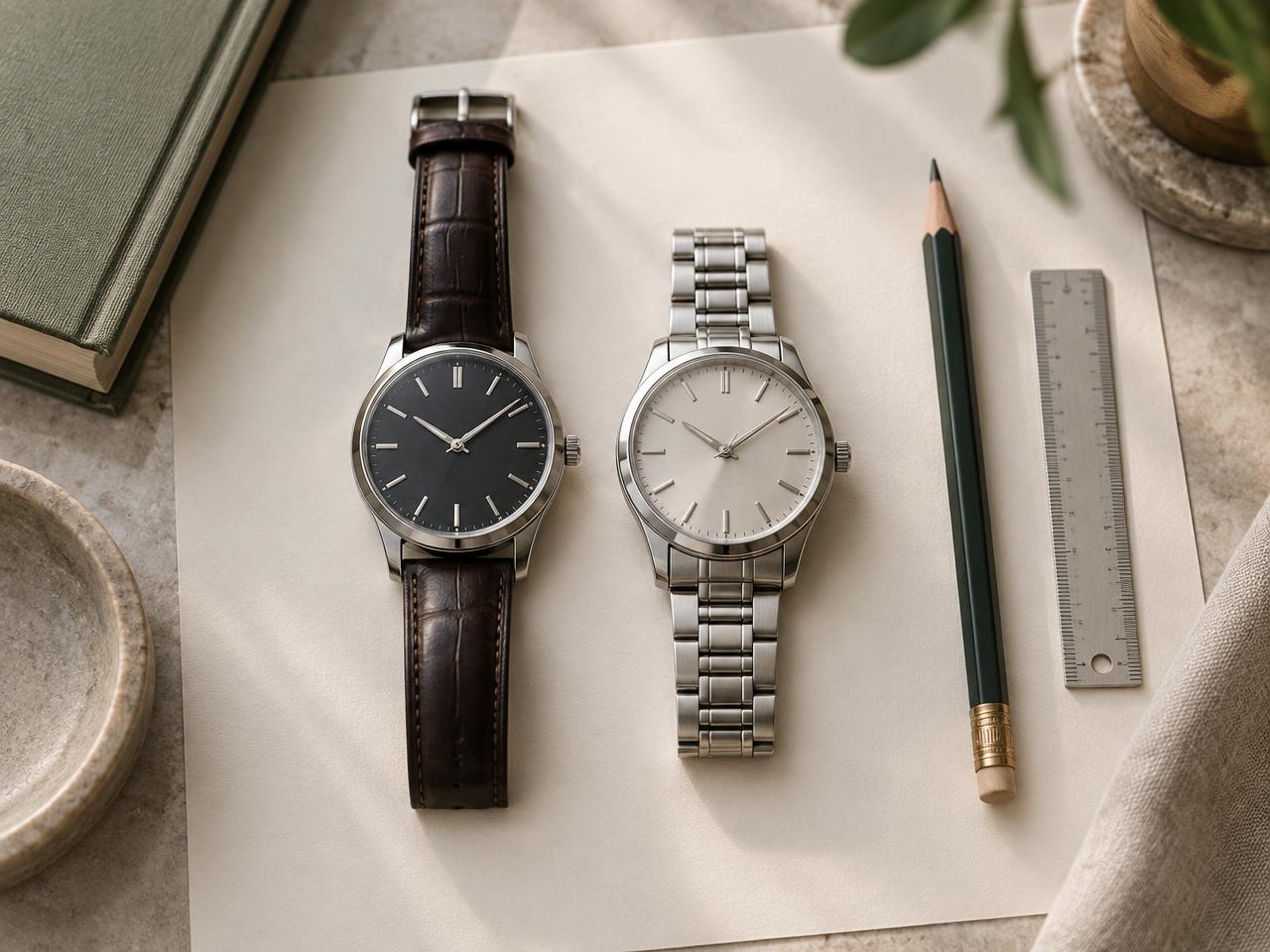
Editorial illustration · product designs shown are unbranded
The same watch can feel noticeably different on a bracelet and on leather. Choose for climate, routine and personal comfort rather than treating either option as universally superior.
The short answer
- Bracelets offer adjustable links or clasps but vary greatly in design.
- Leather can feel light and supple but needs care and eventual replacement.
- Check lug width and attachment compatibility before planning a swap.
Section 01
Comfort is specific to the design
A well-finished bracelet with useful adjustment can be excellent for daily wear. A poorly fitting one may pinch or feel top-heavy. Leather starts relatively light and often conforms quickly, though fit and lining vary.
Heat, humidity, water and activity should influence your choice. Follow the manufacturer’s care guidance for the exact strap or bracelet.
Section 02
Plan for adjustment and replacement
Bracelet sizing may require tools or a watchmaker. Leather straps eventually wear and should be replaced when condition requires it. Confirm the attachment system and dimensions before buying alternatives.
Section 03
Let the watch and wardrobe guide you
A bracelet often emphasises sport or integrated case design; leather can soften a watch or highlight classic proportions. Neither automatically makes a watch formal. Judge the complete design.
Continue your research
Browse current options.
These tagged links open Amazon search results. Listings, sellers, prices and availability can change; verify the exact model before purchasing.
Affiliate links · As an Amazon Associate we earn from qualifying purchases.